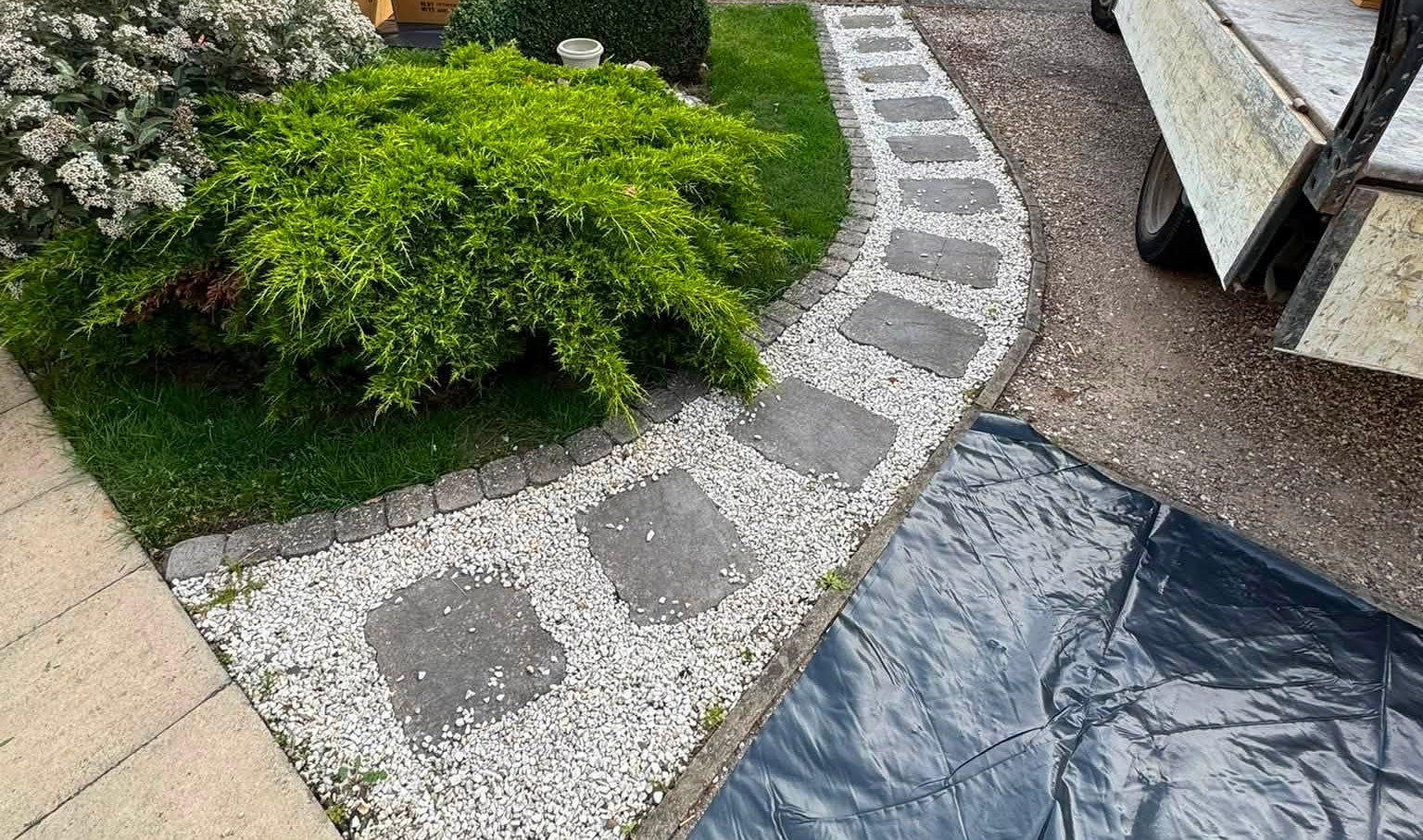
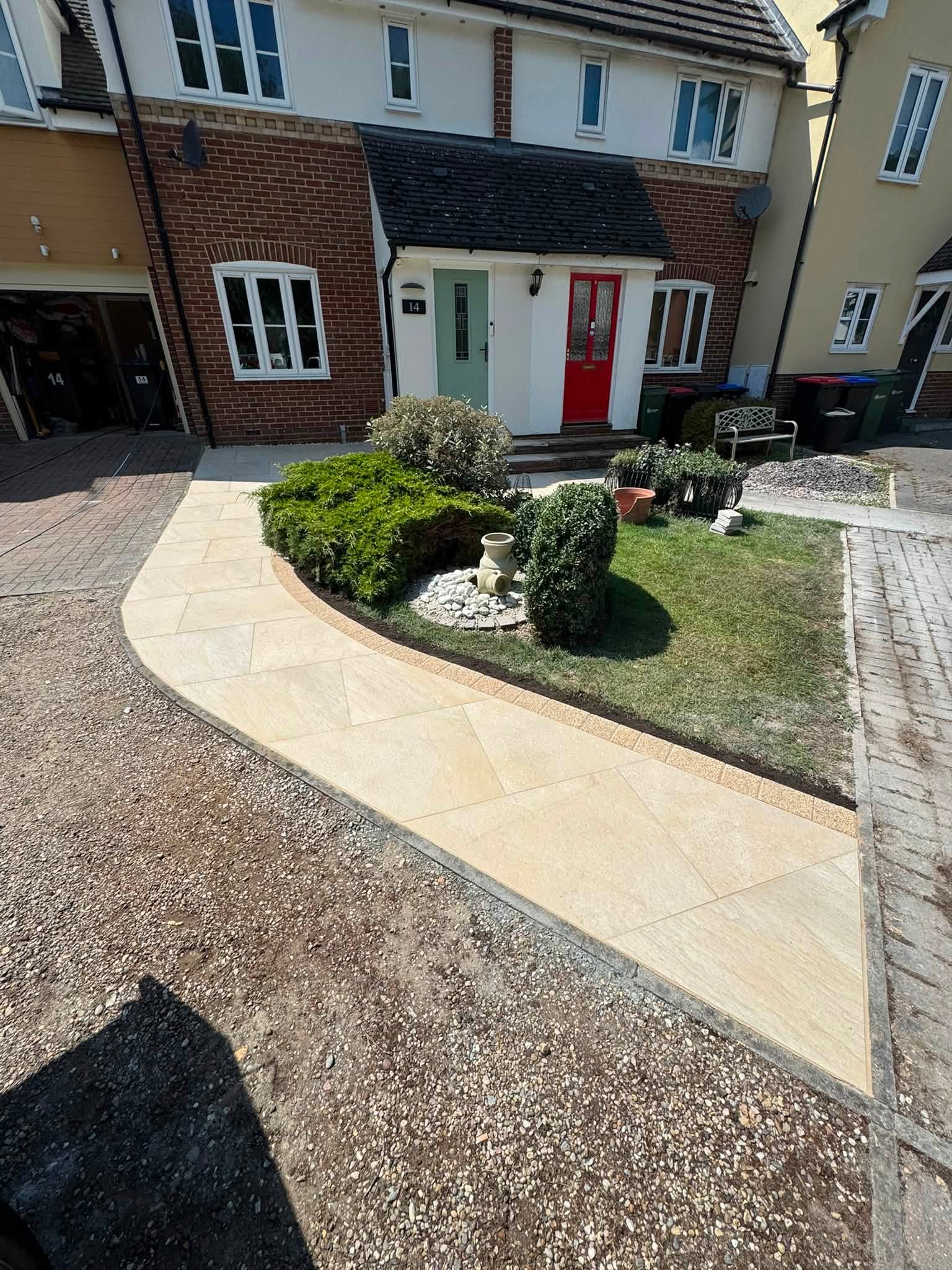
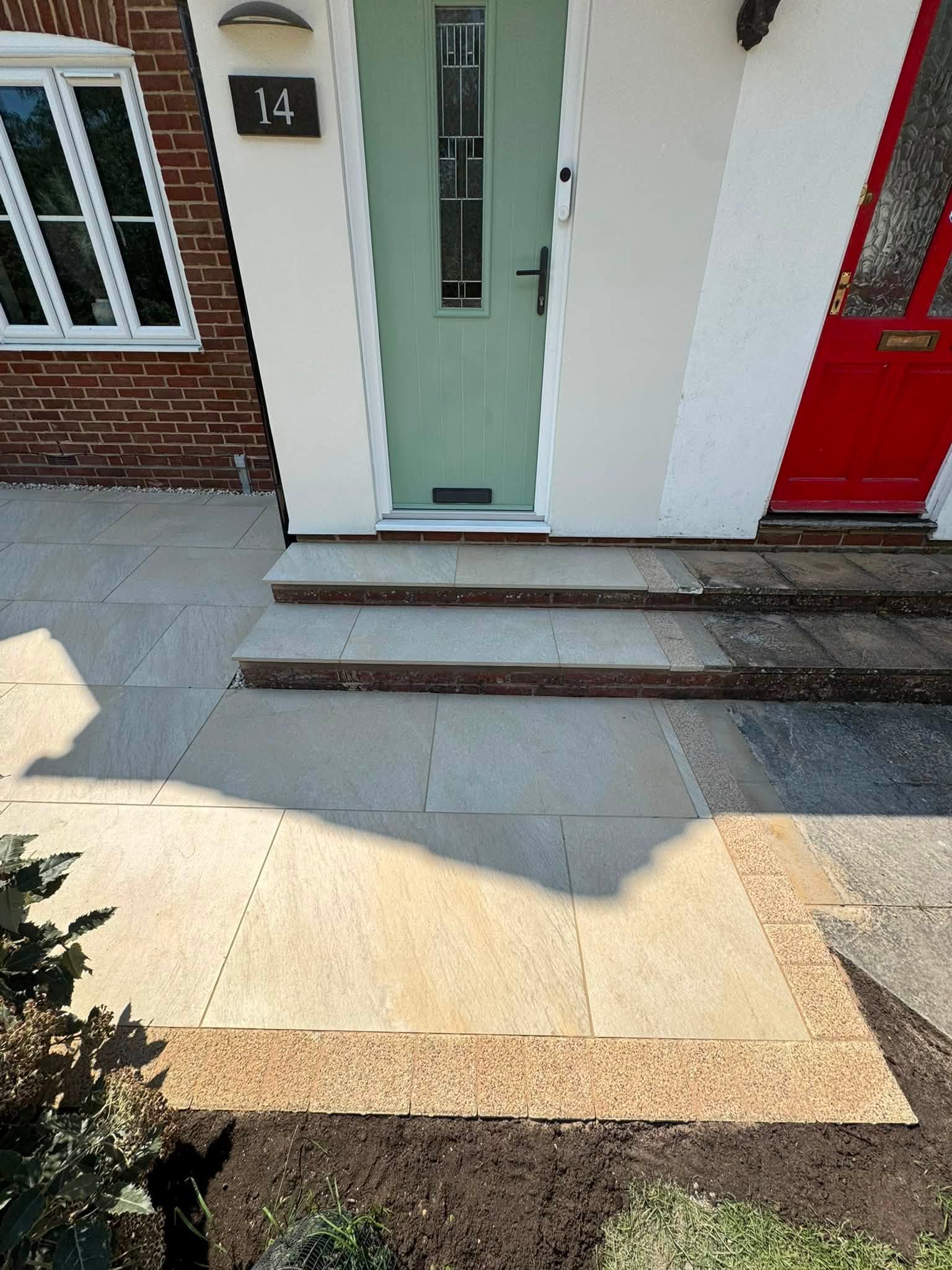
New Project 600×900 Quartzite Porcelain Tiles & Brett Invicta Trio Block Boarder
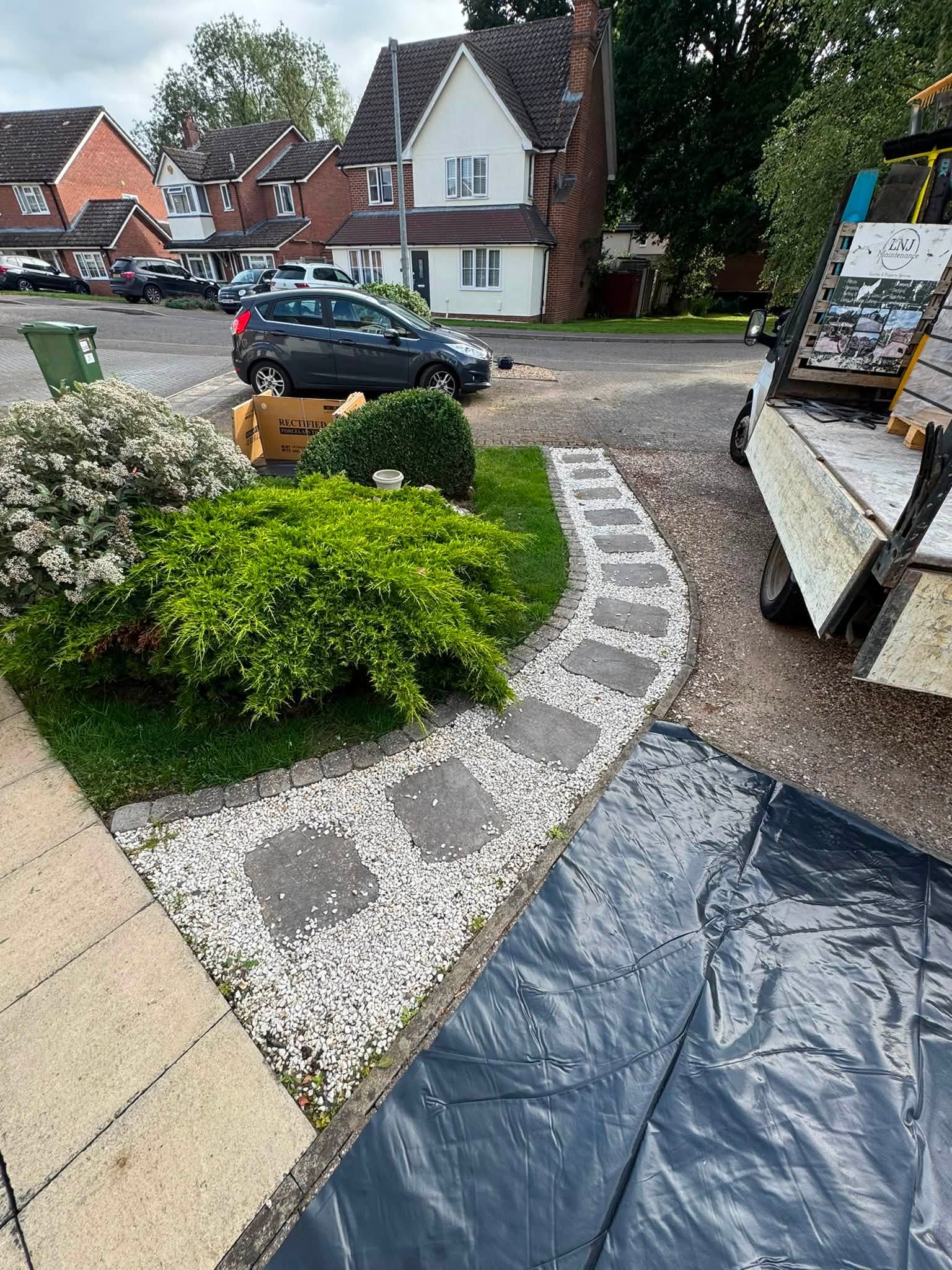
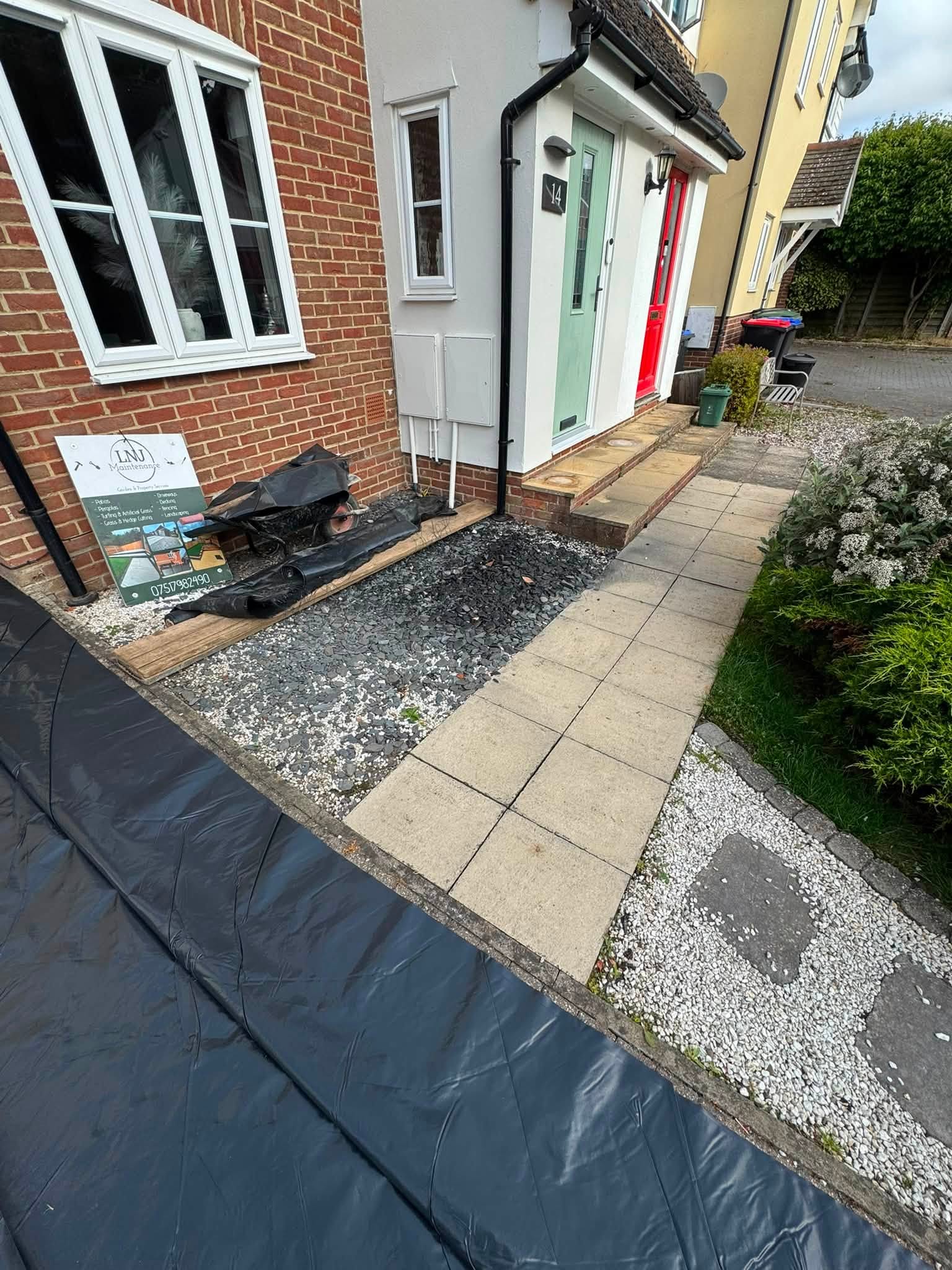
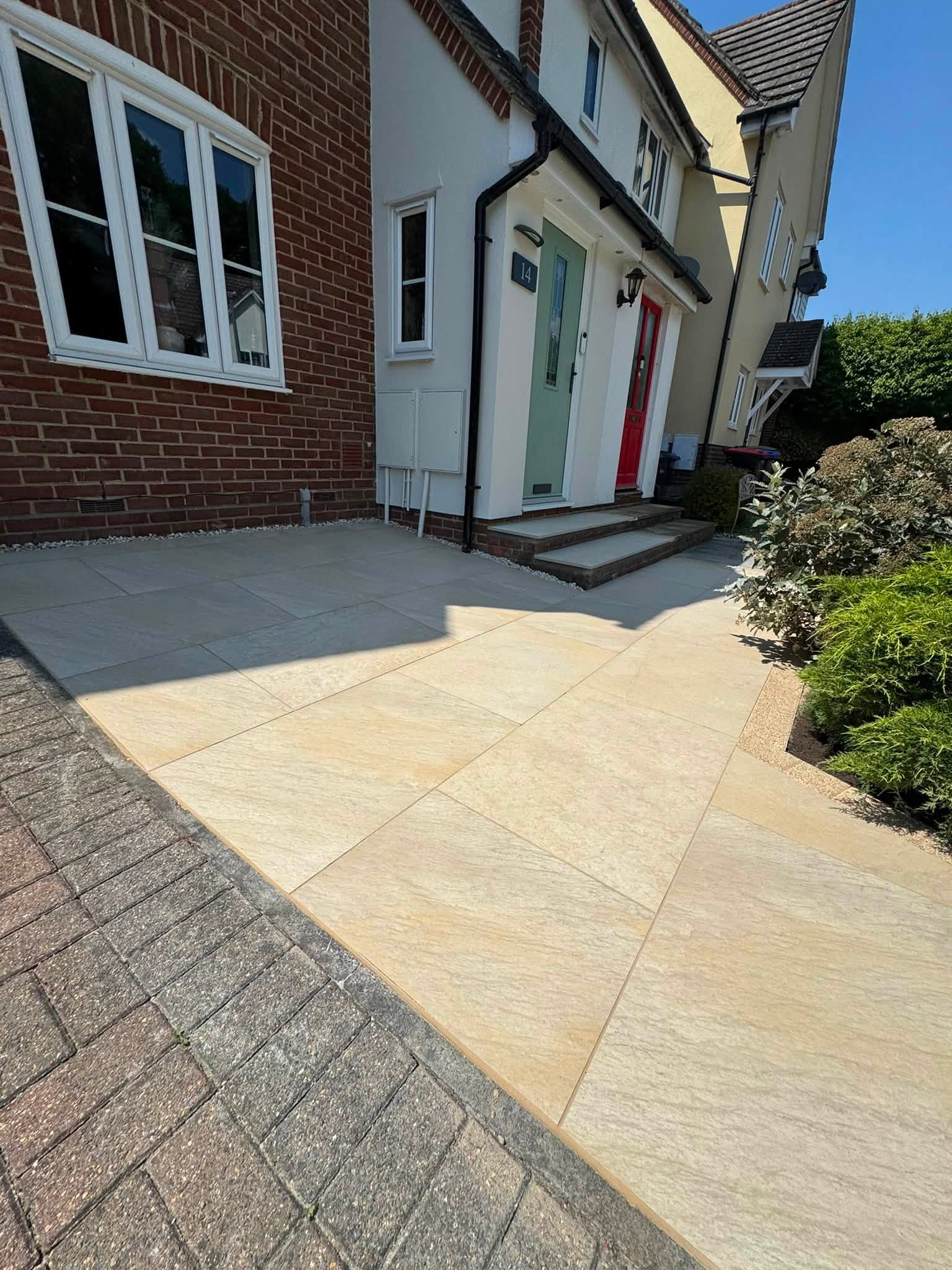
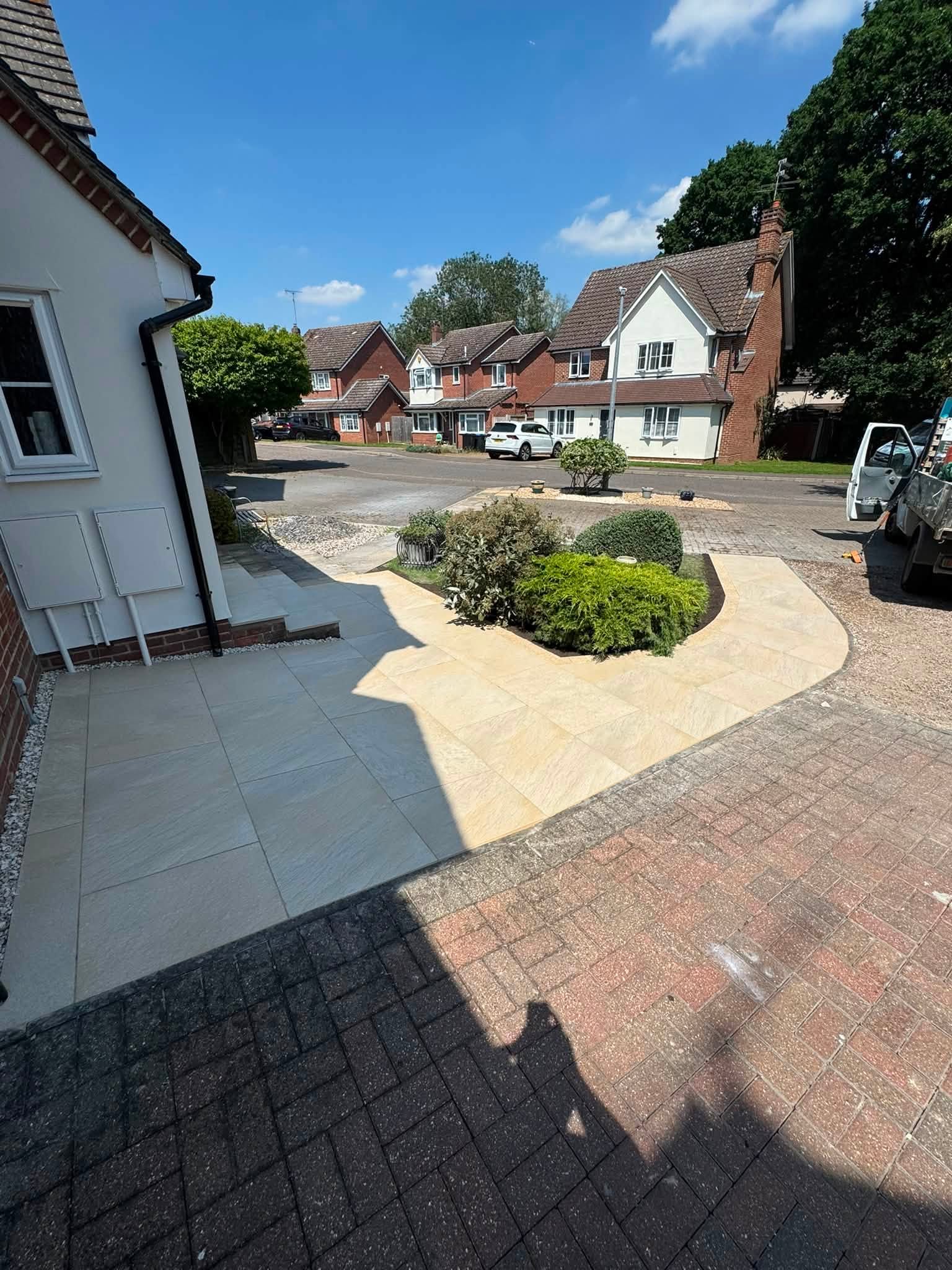
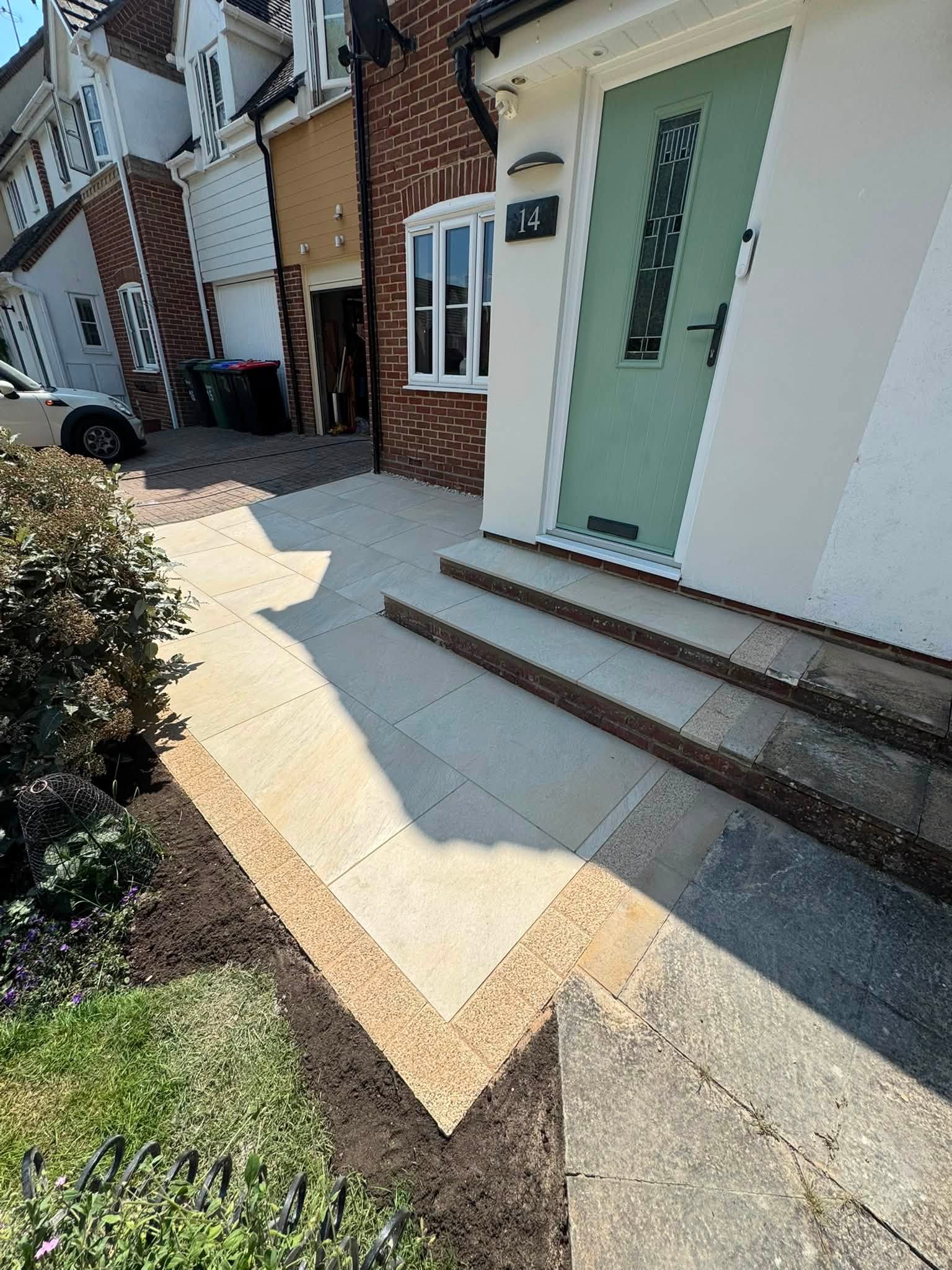
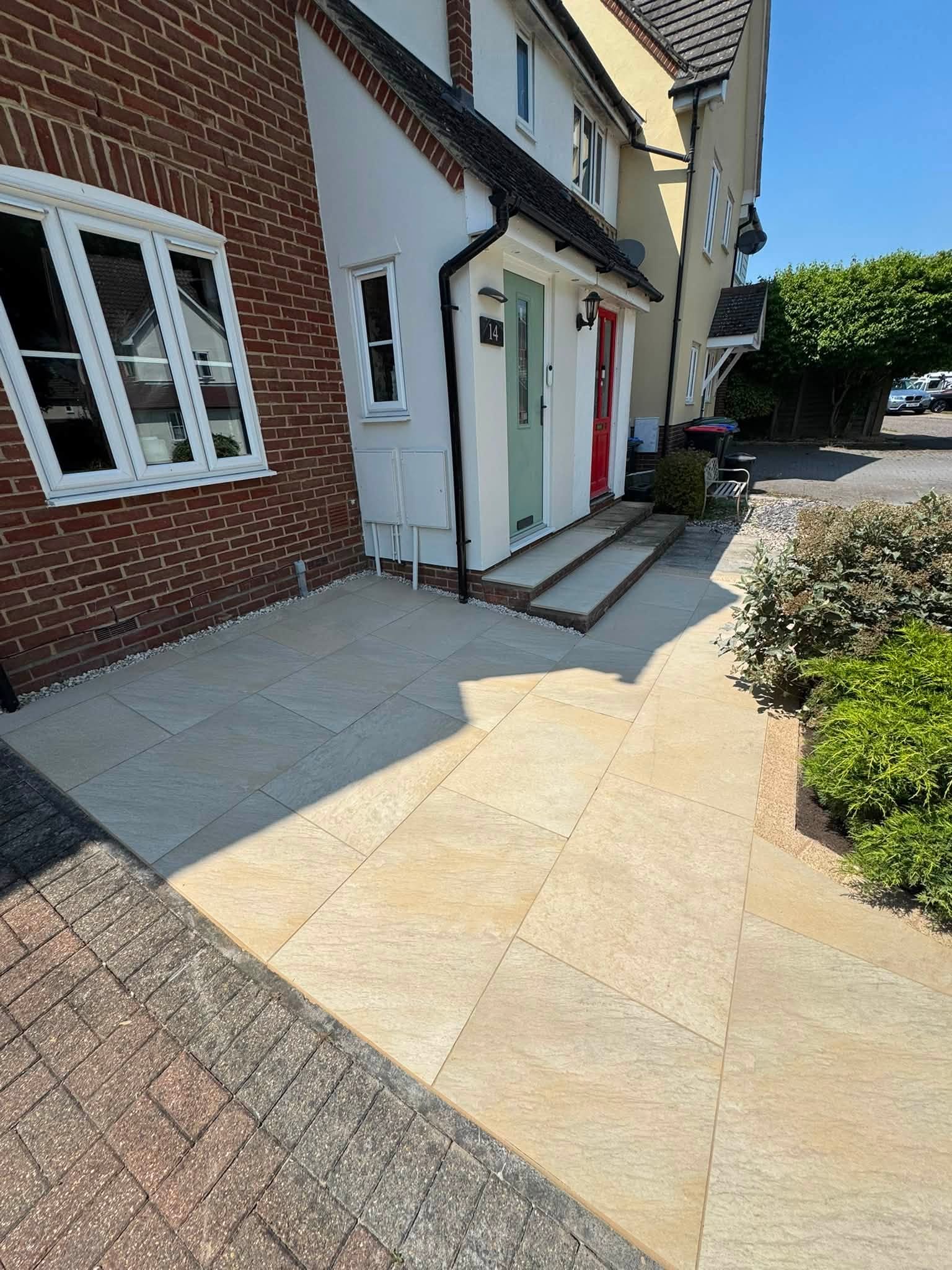
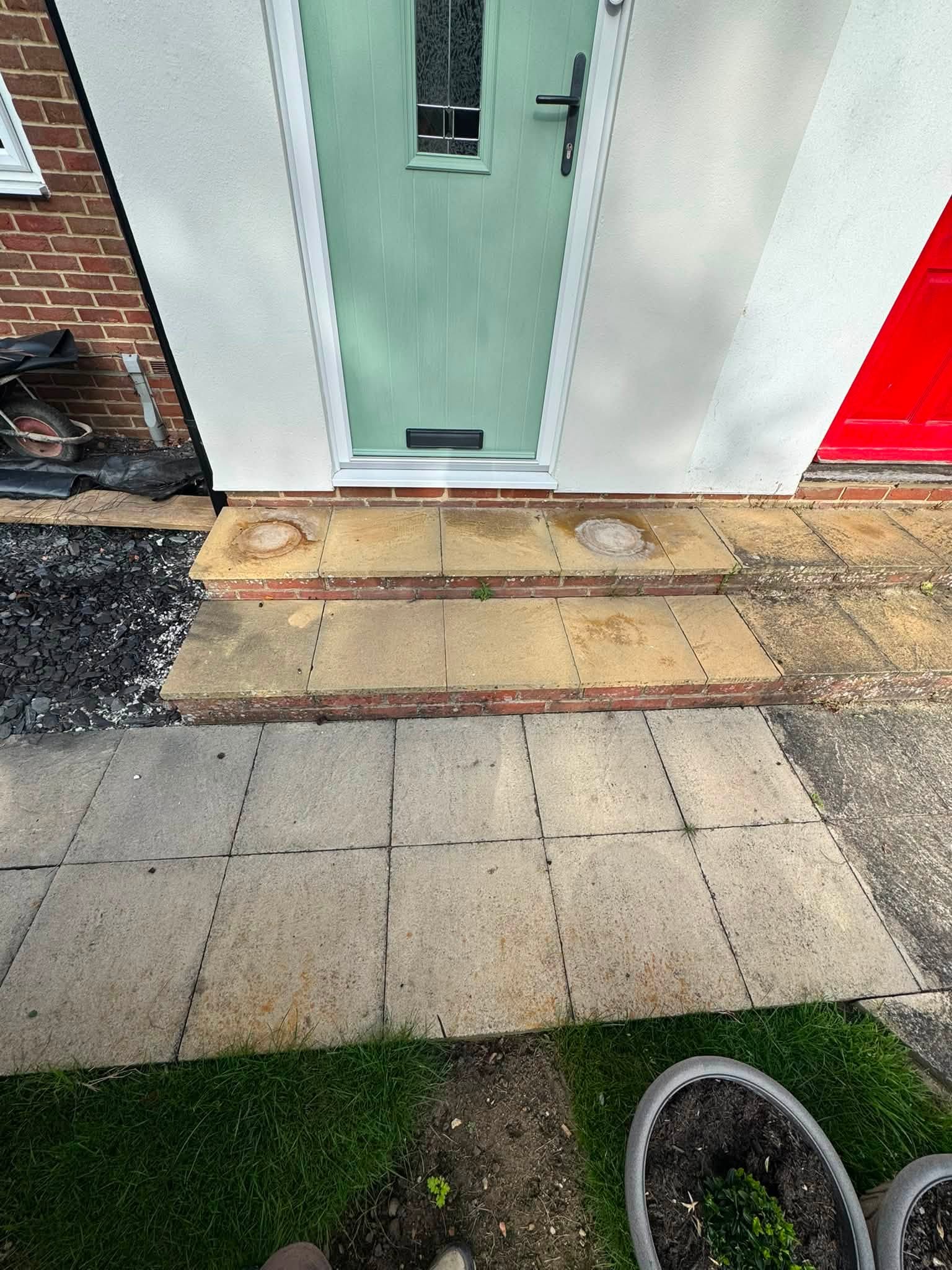
We transformed this front garden with 600x900mm quartzite-effect porcelain paving, finished with a Brett Invicta Trio block paving border.
The combination of large-format porcelain and contrasting block edging has completely refreshed the space, giving it a clean, modern finish with lasting durability.
Things to Consider When Using Quartzite Porcelain Tiles
Quartzite-effect porcelain tiles have become one of the most popular choices for driveways, patios, and front gardens — combining the natural stone look of quartzite with the practicality of porcelain. If you’re planning a project, here are the key things to weigh up before choosing this material.
1. Slip Resistance Outdoor porcelain tiles should carry an R-rating (R9–R11) or a documented slip resistance value, especially for areas exposed to rain. Always check the manufacturer’s rating before installing near entrances, steps, or pool surrounds.
2. Thickness and Load-Bearing Use For garden paths and patios, 20mm porcelain paving is standard. For driveways or areas that need to bear vehicle weight, thicker 20mm+ rated porcelain or reinforced sub-bases are essential — not all porcelain is suitable for driveway use, so it’s worth confirming with your supplier.
3. Frost and Weather Resistance Porcelain is largely non-porous, which makes it highly resistant to frost damage and staining compared to natural stone — a key advantage in the UK climate where freeze-thaw cycles are common.
4. Colour and Finish Consistency Because quartzite-effect porcelain is manufactured rather than quarried, batch consistency is generally better than natural stone. However, it’s still worth ordering from the same batch/lot number to avoid subtle shade variation across a large area.
5. Installation Method Porcelain tiles require a proper sub-base, correct jointing (typically 3–5mm), and appropriate adhesive or bedding method for exterior use. Poor installation is the most common cause of cracking or movement — professional installation is strongly recommended.
6. Maintenance One of the biggest selling points: quartzite porcelain requires minimal maintenance — no sealing, resistant to moss and algae build-up, and easy to clean with a jet wash or mild detergent.
7. Cost vs Natural Quartzite Porcelain typically costs less than natural quartzite while offering better durability and lower long-term maintenance, making it a popular choice for homeowners wanting the aesthetic without the upkeep.
Pairing Quartzite Porcelain with Block Paving Borders
A block paving border is one of the most effective ways to frame quartzite-effect porcelain paving, and it’s a detail worth getting right — both for the finished look and for the practical benefits it brings.
Why Use a Border at All Large-format porcelain slabs (like 600x900mm) can look slightly stark on their own, especially on driveways or front gardens with straight edges. A contrasting block border — such as Brett Invicta Trio — adds visual definition, breaks up the scale of the large tiles, and gives the eye a natural “frame” for the space.
Colour and Contrast Block borders work best when they either contrast or complement the porcelain tone:
- Contrast — a charcoal or graphite block border against a lighter quartzite-effect porcelain creates a crisp, modern edge that’s popular for contemporary front gardens.
- Complement — a mixed-tone block like Brett Invicta Trio (which blends multiple shades) works well when you want the border to tie together several colours already present in the property’s brickwork or existing hard landscaping.
Practical Benefits of a Block Border
- Structural edge restraint — block paving borders help contain and support the porcelain slabs, reducing the risk of edge movement or cracking over time.
- Drainage transition — a block border can help manage the transition between a permeable sub-base and the largely non-porous porcelain surface, particularly relevant given current UK guidance on sustainable drainage (SuDS) for front gardens.
- Easier repairs — if a block within the border gets damaged, individual blocks are far easier and cheaper to replace than lifting and replacing a large-format porcelain slab.
Installation Considerations
- Block paving borders are typically laid on a compacted sub-base with a sand or mortar bedding, while porcelain slabs are usually laid on a mortar bed or pedestal system — the two materials need compatible falls and levels where they meet, so this junction should be planned carefully at the design stage, not improvised on-site.
- A soldier course (blocks laid end-to-end in a single line) is the most common and cost-effective border style; a double or herringbone border adds more visual weight for larger driveways.
Popular Combination Quartzite-effect porcelain paired with a Brett Invicta Trio block border is a widely used combination for UK front gardens and driveways, offering a balance of large-format modern paving with a durable, traditionally-laid edge — giving both contractors and homeowners a finish that’s contemporary but still in keeping with typical UK streetscapes.